 blog
7 Best Water Filtration Systems for South Florida Homes
Last Updated: November 11, 2026
Quick Summary
The best water filtration for South in Florida depends on what your water contains, so start with a water test. Match each problem to a certified technology: carbon for chlorine, a softener for hardness, and reverse osmosis for dissolved solids. Hummingbird Water tests and sizes systems for Miami-Dade and Broward homes.
- Start with a water test covering hardness, chlorine, iron, and other parameters.
- Activated carbon handles chlorine taste and odor, verified under NSF/ANSI 42.
- Hardness needs a cation-exchange softener, since filters do not soften water.
- Reverse osmosis under NSF/ANSI 58 targets dissolved solids, nitrate, and sodium.
- Compare total cost of ownership, including cartridge and media replacement, not just purchase price.
Table of Contents
- Why South Florida Tap Water Needs More Than a Basic Filter
- Whole-House Water Filter for Chlorine: What It Removes and Where It Falls Short
- Reverse Osmosis Drinking Water System: When Point-of-Use Is the Right Choice
- Water Softener for Hard Water and Scale: Filtration Versus Softening
- Choosing a Home Water Filter in Broward County: Testing, Certification and Total Cost
- Booking a Water Test and Custom System Sizing With Hummingbird Water
- Frequently Asked Questions
Why South Florida Tap Water Needs More Than a Basic Filter
Many South Florida homeowners assume their tap water is fine, so they never look for the best water filtration for South in Florida, because it comes from a municipal system. The reality is more complicated. Water here carries hardness, chlorine, and iron that a basic pitcher filter was never designed to handle. EPA Safe Drinking Water Act overview sets federal limits for public water supplies, but those limits do not guarantee the taste, scale control, or skin-friendly quality most households want.
Hummingbird Water, a local, family-run business serving Miami-Dade and Broward Counties, starts with a water test. A test identifies what is actually in your water, which is a sensible starting point for choosing a system.
A basic filter reduces some contaminants at one faucet. It does not protect your water heater, dishwasher, or shower fixtures from mineral buildup. It also does not change how your skin feels after a shower. Households that want those benefits often consider a whole-home approach.
Watch out: Buying a system based on a neighbor's recommendation without testing your own water often leads to undersized or mismatched equipment.
Whole-House Water Filter for Chlorine: What It Removes and Where It Falls Short
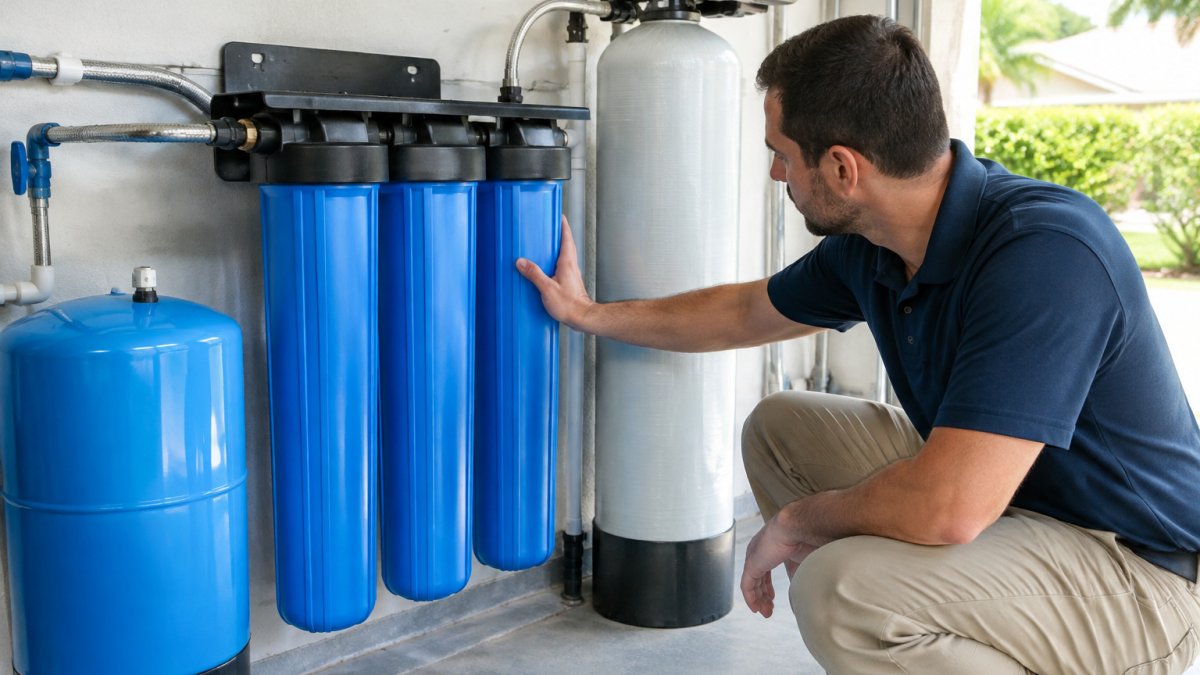
A whole-house water filter treats water as it enters the home, so every tap, shower, and appliance receives treated water. For chlorine, activated carbon is the most common medium. Carbon adsorbs chlorine and improves taste and odor across the entire house, which is why many South Florida families use it as a first stage.
The limit is that a whole-house carbon system addresses chlorine and some organic compounds well, but it does not soften hard water or remove dissolved minerals. Expecting it to solve scale problems leads to disappointment. Pair it with the right second stage when hardness is also a concern.
Filter capacity matters here. Carbon media is rated by how much chlorine it can absorb before it is spent. Heavy use in a large household shortens replacement intervals, so ask for a sizing estimate based on your actual water test and household size.
Reverse Osmosis Drinking Water System: When Point-of-Use Is the Right Choice
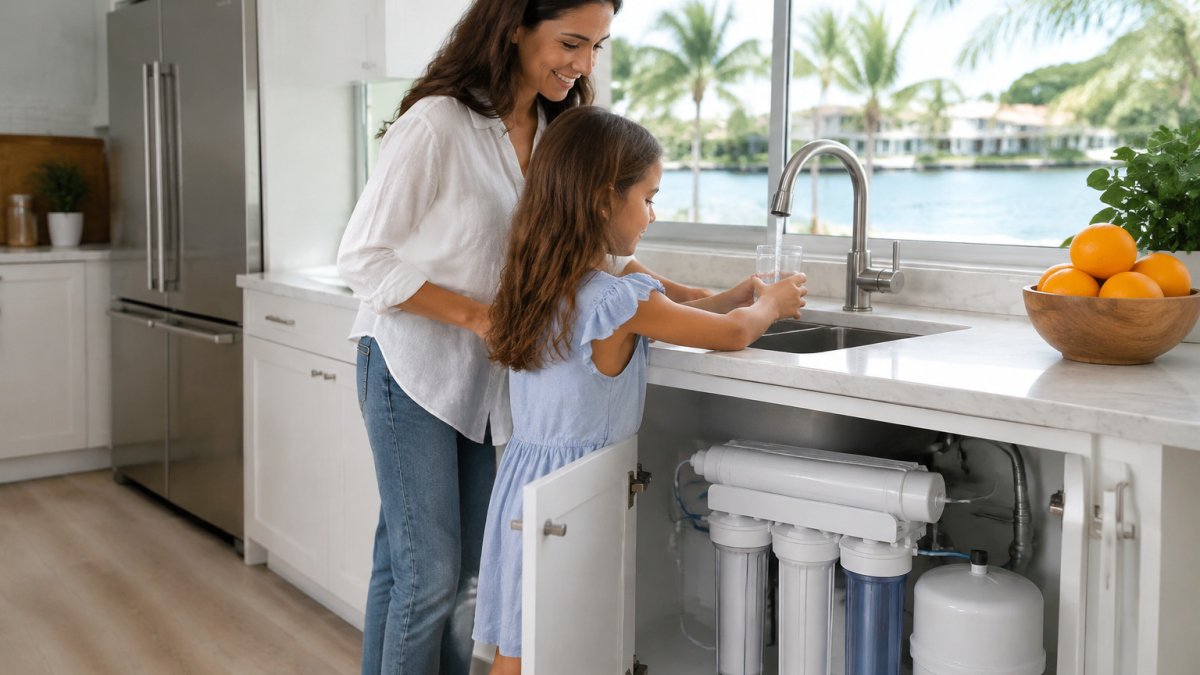
A reverse osmosis system works at a single point, usually under the kitchen sink, and produces purified water for drinking and cooking.
What RO actually removes depends on the membrane and the prefilters in front of it. A typical under-sink unit pairs a sediment prefilter, one or two carbon blocks for chlorine and taste, the RO membrane itself, and a polishing carbon filter. That stack is why RO handles dissolved contaminants that a whole-house carbon tank cannot.
Certification is where most shopping goes wrong. NSF/ANSI 58 is the standard for point-of-use RO systems, and NSF/ANSI 42 and 53 cover the carbon prefilters for taste/odor and health-related contaminants respectively.
Sizing and recovery matter more than most buyers expect. Residential RO systems send some of the water they process to drain, and designs differ in how much they waste. Storage tank size determines how much purified water is on hand at once, which matters for a family filling pitchers and cooking pots throughout the day.
Reverse osmosis is often considered when drinking and cooking water quality is the main concern and the home already has adequate whole-house treatment. It is not a substitute for whole-house treatment, because showers and laundry still use untreated water unless you add a whole-house system.
Watch out: Skipping the chlorine prefilter, or letting it run past its change interval, will degrade the RO membrane and quietly raise your long-term cost.
Water Softener for Hard Water and Scale: Filtration Versus Softening
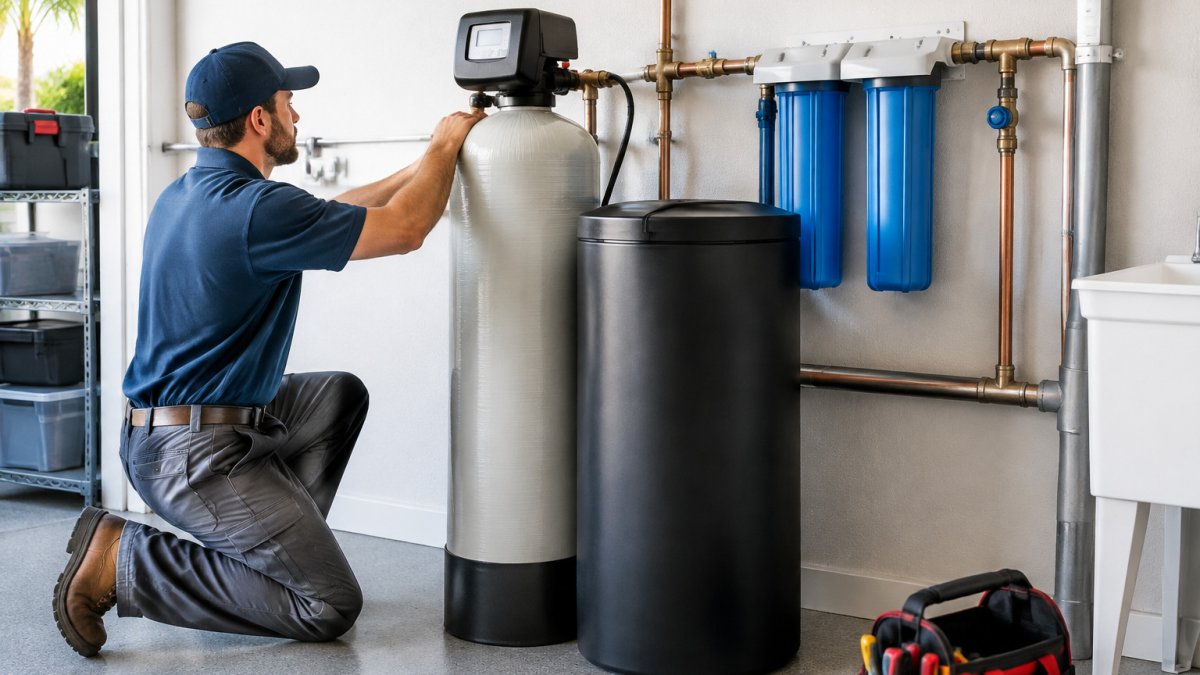
Hard water is high in calcium and magnesium. These minerals form scale on heating elements, inside pipes, and on fixtures, and they make soap less effective. A water softener exchanges those minerals for sodium or potassium through an ion-exchange process, which is a different job from filtration.
Filtration and softening solve different problems. A filter removes particles, chlorine, or certain contaminants. A softener addresses hardness specifically. Many homes need both, and treating them as interchangeable is a common mistake that leaves scale problems unresolved.
Softened water can help households use less soap and cleaning product, and it helps protect water-using appliances from mineral buildup. The exact savings depend on your water hardness and habits, so an honest assessment starts with a test rather than a promise.
Choosing a Home Water Filter in Broward County: Testing, Certification and Total Cost
Start with a water test. Results show hardness, chlorine, iron, and other parameters that determine which equipment fits. Without that data, any recommendation is a guess. A useful test covers hardness, total dissolved solids, chlorine, iron, nitrate, and, for well owners, bacteria and sodium.
Next, match the contaminant to the technology and to a certification. This is the step most buying guides skip, and it is the one that separates a tested reduction claim from marketing language:
- Chlorine taste and odor: activated carbon, verified under NSF/ANSI 42.
- Sediment and particulates: a sediment prefilter rated by micron size, verified under NSF/ANSI 42.
- Health-related contaminants such as lead, cysts, and volatile organic compounds: carbon block or RO, verified under NSF/ANSI 53 or 58 depending on the device.
- Hardness (calcium and magnesium): a cation-exchange softener, not a filter.
- Dissolved solids, nitrate, sodium, and similar: reverse osmosis under NSF/ANSI 58.
Ask which standard applies to each component and confirm the certification covers the contaminant you are targeting. Hummingbird Water uses NSF-certified components manufactured and assembled in the USA.
Then calculate total cost of ownership rather than comparing purchase prices alone. The structure to compare is purchase price, installation, replacement cartridges or media, salt for softeners, and service visits, spread over the equipment's expected life. Carbon media and RO membranes have finite capacity, so replacement frequency, driven by your household size and water chemistry, is the line item that most changes the multi-year number. Pricing depends on system configuration, water test results, and installation requirements, so request a quote from Hummingbird Water for current figures. You can book a drain inspection or review drinking water systems before deciding.
Finally, size the system to the household. Flow rate and pressure drop determine whether showers and appliances still perform, and capacity determines how often you service the unit. A system sized for a two-person condo will underperform in a five-person home with a pool and irrigation.
Watch out: Buying on purchase price alone usually shifts cost into replacement filters and service, and a unit certified for the wrong contaminant solves a problem you do not have.
Private Wells, Septic Systems and Saltwater Intrusion
Homes on private wells need a different approach. Well water is not treated by a municipality, so testing for bacteria, nitrates, and other parameters matters more. Septic systems and proximity to saltwater can also affect groundwater quality in parts of South Florida. EPA guidance on private well water testing explains which parameters homeowners should check.
If your home is on a private well, test before selecting treatment. Saltwater intrusion can raise sodium and chloride levels, which affects both taste and the choice of softener or reverse osmosis equipment.
The article matches each contaminant to a treatment technology and a certification standard, which is summarised below.
| Contaminant or issue | Technology | Certification |
|---|---|---|
| Chlorine taste and odor | Activated carbon | NSF/ANSI 42 |
| Sediment and particulates | Sediment prefilter | NSF/ANSI 42 |
| Lead, cysts, VOCs | Carbon block or RO | NSF/ANSI 53 or 58 |
| Hardness (calcium, magnesium) | Cation-exchange softener | Not a filter |
| Dissolved solids, nitrate, sodium | Reverse osmosis | NSF/ANSI 58 |
Booking a Water Test and Custom System Sizing With Hummingbird Water
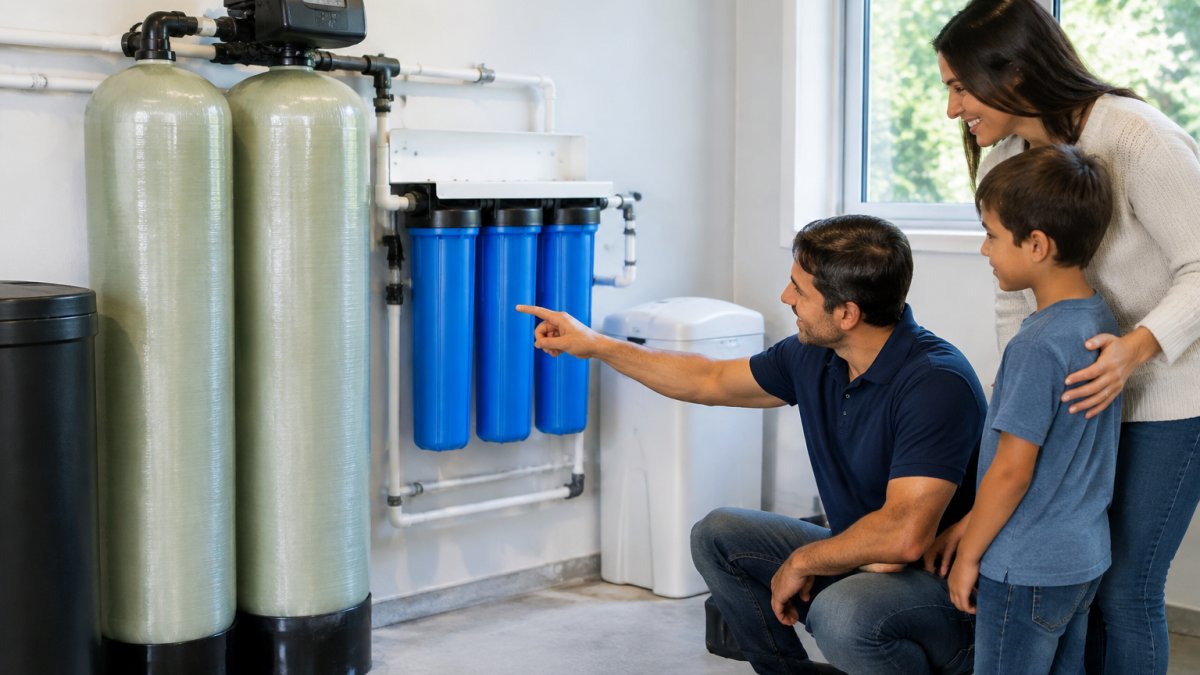
The right system starts with an accurate picture of your water. Hummingbird Water's own crew installs systems rather than sending subcontractors, and each system is custom-sized after a thorough water test.
To start, book a drain inspection or visit our drinking water systems page to see the full range of options. A test and sizing review gives you a clear recommendation based on your water, not a generic product pitch.
Frequently Asked Questions
Why does my Miami-Dade water taste like chlorine?
Municipal utilities add chlorine to kill bacteria as water travels through long distribution systems to homes. A whole-house water filter with activated carbon media reduces chlorine at every tap, while a point-of-use filter at the kitchen sink can improve the water you drink and cook with. If taste changes suddenly, check with your utility first, then have your water tested.
Which type of water filter is best for a South Florida home?
The best choice depends on the problem you need to solve. A whole-house system addresses chlorine, sediment and general taste across the home. A reverse osmosis system provides the highest purity at a single drinking tap. A water softener targets hardness and scale but does not remove chlorine. Many South Florida homes combine a whole-house filter with a reverse osmosis unit under the kitchen sink. A water test identifies which combination fits your water.
Do South Florida homes need a water softener?
Many South Florida homes have hard water, which can leave mineral scale on fixtures and increase soap use. A water softener exchanges calcium and magnesium for sodium or potassium to reduce hardness. Softening does not remove chlorine, so it is often paired with a carbon filter. Pricing depends on system size, installation requirements and options, so contact Hummingbird Water for a quote based on your water test.
Is reverse osmosis a good choice for drinking water?
Reverse osmosis forces water through a membrane that removes most dissolved minerals, chlorine byproducts and many contaminants, producing very clean drinking water. It works well at a kitchen tap. It wastes some water during filtration, so it is usually installed for drinking and cooking rather than whole-house use. Look for NSF-certified components and confirm the system's certifications match the contaminants in your water.