 blog
Whole House Water Filter for Chlorine and Sediment: What to Know
Last Updated: November 14, 2026
Quick Summary
A whole house water filter for chlorine and sediment is a point-of-entry system installed at the main water line, pushing water through a sediment prefilter then carbon media that strips chlorine. Sediment runs first to protect the carbon bed, and carbon second for chlorine reduction, because the wrong sequence shortens media life.
- A 5-micron sediment filter catches finer grit than 20-micron but clogs faster.
- Catalytic carbon is better than standard carbon for chloramine removal.
- A system rated below peak demand will starve showers and appliances.
- Well water usually needs more than chlorine and sediment treatment, so testing is not optional.
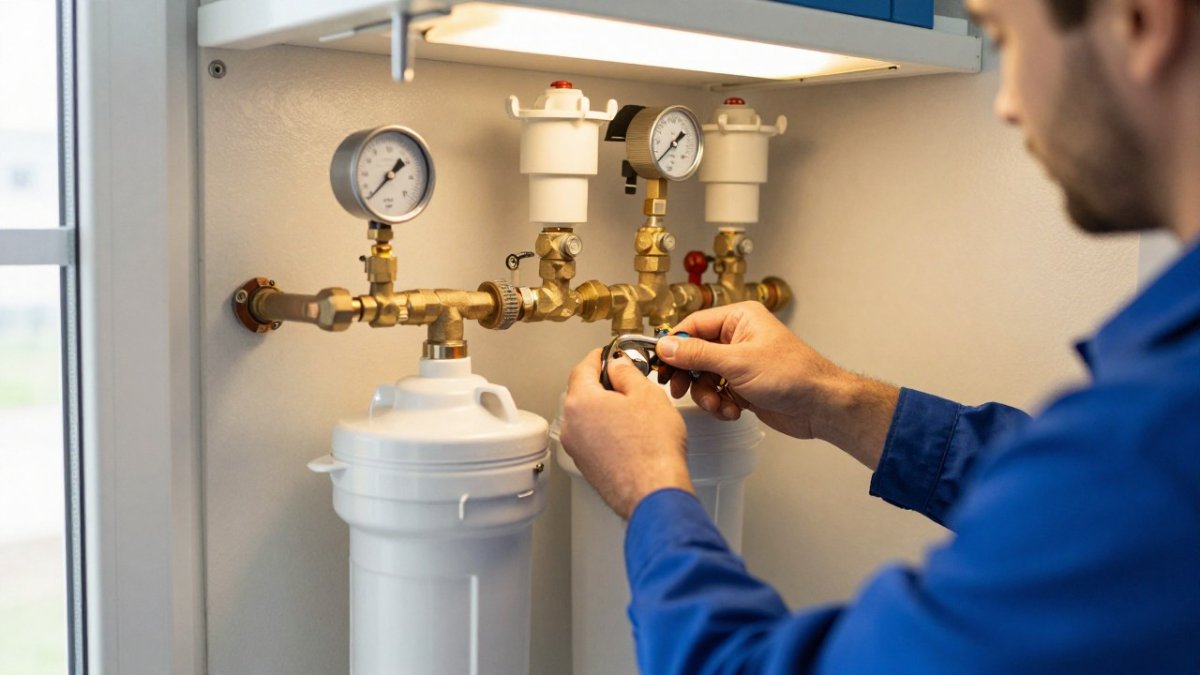
- Check the pressure gauge monthly, since a steady drop usually means a clogged prefilter.
Table of Contents
- How a Whole House Water Filter for Chlorine and Sediment Works
- Best Whole House Water Filtration System for City Water
- Whole House Water Filtration System for Well Water
- Frequently Asked Questions
How a Whole House Water Filter for Chlorine and Sediment Works
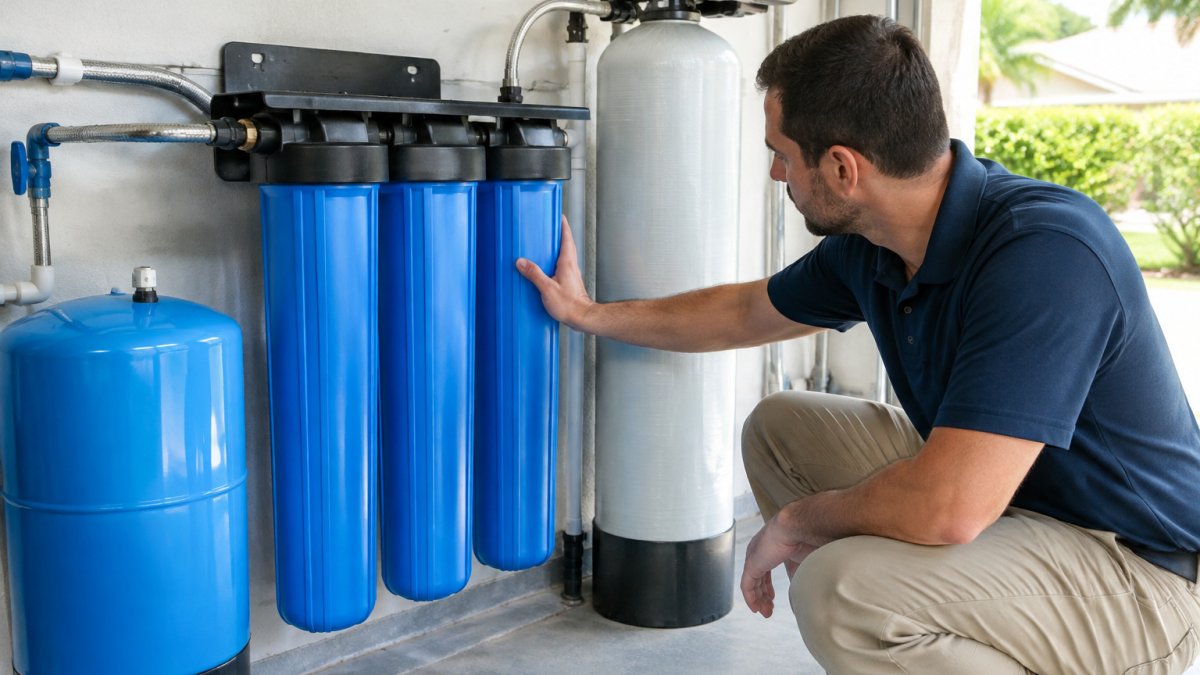
A whole house water filter for chlorine and sediment is a point-of-entry system installed at the main water line, pushing water through a sediment prefilter then carbon media that strips chlorine.
Sediment runs first to protect the carbon bed, carbon second for chlorine reduction; the wrong sequence shortens media life.
What each stage actually does
Sediment filtration catches dirt, sand, and rust; a 5-micron filter catches finer grit than 20-micron but clogs faster. Carbon filtration uses adsorption to pull chlorine and VOCs, and catalytic carbon is better for chloramine.
The point-of-entry principle
Point-of-entry filtration sits at the main line so the whole home benefits, unlike a point-of-use filter under one sink. A system rated below peak demand will starve showers and appliances, so checking incoming pressure and flow rate matters before installation.
To compare full whole-home configurations, our whole house water filter buyer's guide walks through the trade-offs.
Best Whole House Water Filtration System for City Water
A whole house water filtration system for city water generally pairs a sediment prefilter with carbon filtration, since municipal water is already disinfected. Whether iron or hardness treatment is needed depends on water testing.
EPA information on drinking water treatment and disinfection explains why utilities disinfect with chlorine or chloramine and what that means for home filtration choices.
Certification and claim verification
Ask for NSF certification on components, not just a marketing badge.
If you are ready to see the configurations we install across Miami-Dade and Broward Counties, our whole home systems page shows the categories and lets you book an appointment.
Whole House Water Filtration System for Well Water
A whole house water filtration system for well water usually needs more than chlorine and sediment treatment, because private wells can carry iron, hardness, sulfur odor, and higher sediment loads. Testing is not optional here.
Well water is harder on filters: higher sediment means more frequent prefilter changes, and iron can foul carbon media if not removed upstream.
When you might want extra polishing at the tap
Some households add a point-of-use stage for drinking and cooking. Our guide on the benefits of reverse osmosis water covers what it adds on top of whole-home filtration.
Cartridge replacement and maintenance
Keep a spare set on hand and check the pressure gauge: a steady drop usually means a clogged prefilter.
| Task | Frequency | Why it matters |
|---|---|---|
| Check pressure gauge | Monthly | Spots a clogged prefilter early |
| Replace sediment prefilter | Every few months, based on water quality | Protects the carbon stage |
| Replace carbon media | Per manufacturer schedule | Keeps chlorine reduction working |
Flow rate, pressure drop, and sizing
A system must deliver enough maximum flow to run a shower, washing machine, and faucet at once without noticeable pressure drop.
If you are unsure what your home needs, start with a water test and a conversation about your household's water use. Get started with Hummingbird Water and a system sized to your home, installed by our own crew, not subcontractors.
A whole-home filter is only worth it when it is matched to your water. The wrong micron rating, the wrong media, or the wrong capacity all cost you money and deliver little. Let us test your water, size the system to your home, and install it with our own team so it performs the way it should. Book an appointment and we will walk you through the options for your supply.
Frequently Asked Questions
Do whole house water filters remove chlorine?
Yes, when the system includes carbon filtration. Activated carbon or catalytic carbon media adsorbs chlorine as water passes through, reducing taste and odor at every tap. Standard sediment cartridges alone do not remove chlorine, so look for a multi-stage system that pairs a sediment prefilter with a carbon stage. If your municipal supply uses chloramine instead of chlorine, ask about catalytic carbon media, since media choice matters for chloramine.
Can one whole house water filter remove both chlorine and sediment?
A multi-stage system handles both. The sediment stage traps dirt, sand, and rust, while the carbon stage reduces chlorine and improves taste and odor. Putting the sediment filter first protects the carbon media from clogging, which extends its service life. Choose micron ratings based on your water test results, and confirm the system's maximum flow rate matches your household demand so pressure does not drop.
How often should you replace whole house water filter cartridges?
Cartridge replacement intervals depend on water quality and household water use, so a water test before installation helps set a realistic schedule. Homes on well water with heavy sediment may need more frequent changes. Many systems include a pressure gauge, and a steady drop in pressure is a reliable sign the cartridge is clogged. A water test before installation gives you a realistic schedule.