 how-to
How Do You Remove Chlorine From Tap Water at Home?
Quick Summary
You can remove chlorine from tap water at home by letting it stand uncovered for several hours, boiling it, or running it through a carbon filter. Standing and boiling work only for free chlorine, while chloramine needs a carbon filter or chemical dechlorinator. Check your utility's water quality report first to see which disinfectant it uses.
- Check your utility's Consumer Confidence Report to see whether it uses free chlorine or chloramine.
- Let free chlorine water stand in an open container for several hours or overnight.
- Boil water at a rolling boil for about one minute to drive off free chlorine.
- Standing and boiling usually do not remove chloramine, so use a carbon filter or chemical dechlorinator.
- Choose filters certified to NSF/ANSI 42 for chlorine reduction, and confirm chloramine rating if needed.
Table of Contents
- How to Remove Chlorine From Tap Water: Quick Answer and What to Check First
- How Long to Let Tap Water Sit to Get Rid of Chlorine
- Using Dechlorinated Water for Plants and Fish
- How to Remove Chlorine From Water for Fish Tanks
- Testing Your Water and Booking a Whole-Home Assessment With Hummingbird Water
- Frequently Asked Questions
How to Remove Chlorine From Tap Water: Quick Answer and What to Check First
Last Updated: November 8, 2026
Most tap water in the United States is treated with chlorine to kill bacteria, which is why your kitchen tap may smell like a swimming pool.
Before you choose a method, check one thing first: which disinfectant your utility uses. Free chlorine evaporates from water. Chloramine, a combination of chlorine and ammonia, does not. That difference decides whether a simple home method will work for you.
Identify Whether Your Utility Uses Chlorine or Chloramine
Your water utility must publish an annual water quality report, usually called a Consumer Confidence Report (the EPA). The EPA Consumer Confidence Report guidance explains how these reports list the disinfectant your system uses.
Look for "free chlorine," "total chlorine," or "chloramine" in the report. You can also call the utility and ask directly. Many people find the answer is printed on their bill or on the utility's website.
Knowing this one detail saves time and money. Here is the quick version:
- Free chlorine: Standing, boiling, and carbon filters can all work.
- Chloramine: Standing and boiling usually do not work. You need a carbon filter or a chemical dechlorinator.
How Long to Let Tap Water Sit to Get Rid of Chlorine
Letting water stand is the simplest way to remove free chlorine. Fill a clean, open pitcher and leave it on the counter.
A glass pitcher of tap water left uncovered on a kitchen counter, with morning light from a window.
Look for these points when comparing filters:
- Certification: Check for NSF/ANSI standards that cover chlorine reduction. NSF/ANSI 42 covers aesthetic effects such as chlorine taste and odor, while NSF/ANSI 401 covers emerging contaminants. For chloramine, confirm the filter is certified to NSF/ANSI 42 for chloramine reduction specifically, not just chlorine.
- Replacement schedule: Compare how often cartridges need changing and what they cost per year. A pitcher cartridge may last about two months, while an under-sink cartridge may last six to twelve months depending on capacity and use.
- Flow rate: Make sure the filter keeps up with your household's water use. A low flow rate can slow filling a pot or a pitcher, while a high flow rate may shorten cartridge life.
Watch out: A filter labeled only for "chlorine reduction" may not remove chloramine, so check the certification listing for the exact contaminant.
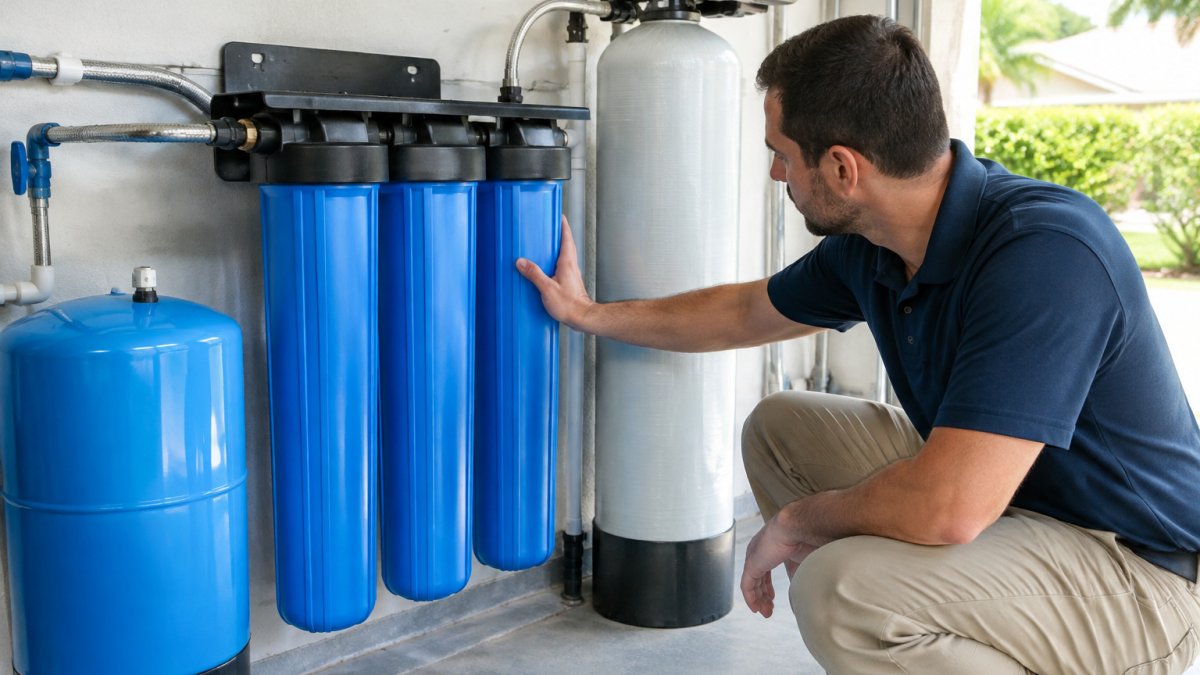
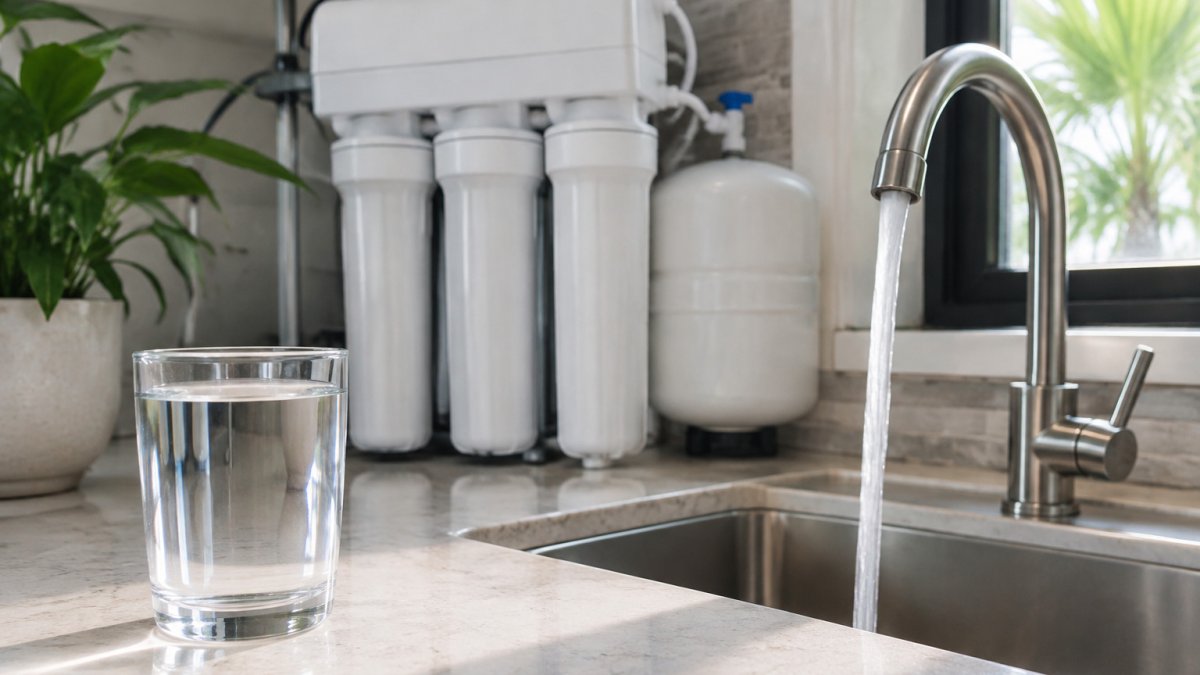
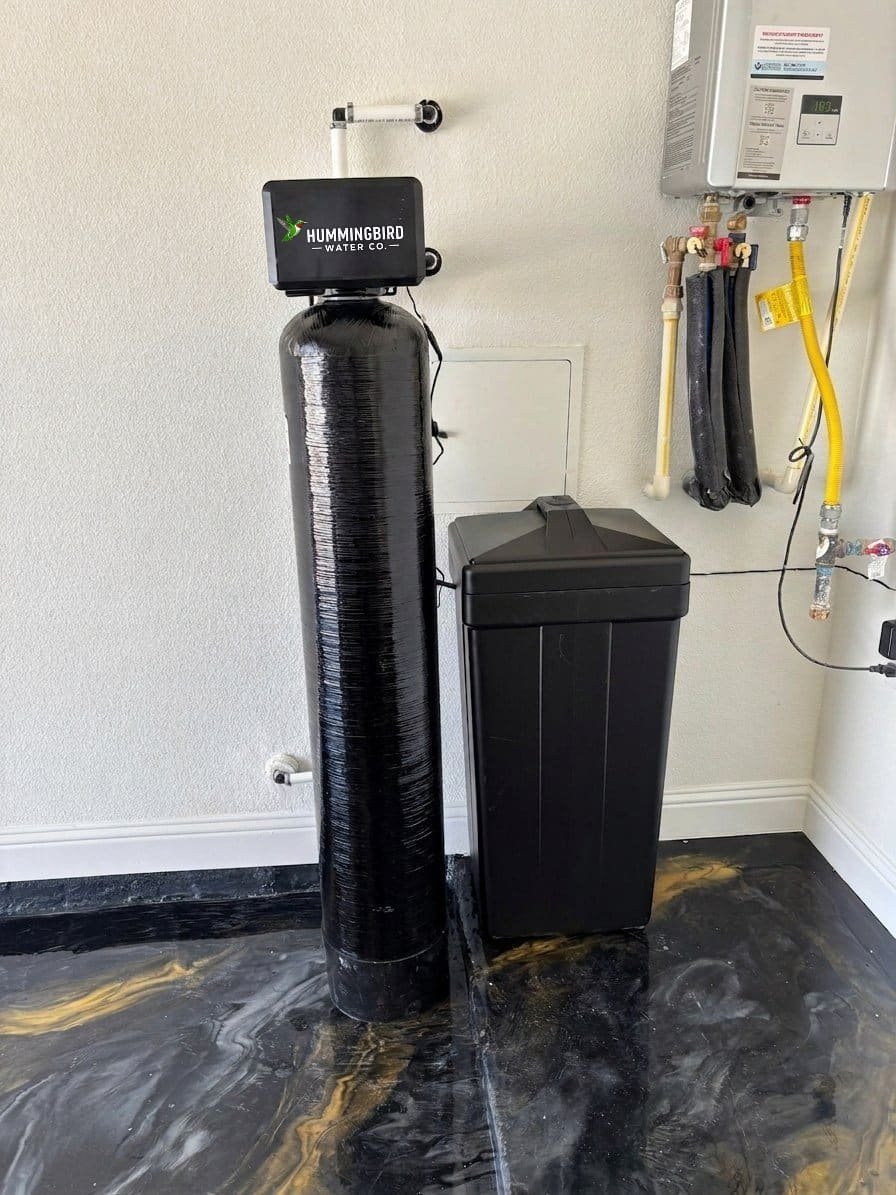
Hummingbird Water designs custom-sized whole-home systems and reverse osmosis drinking water systems for homes in Miami-Dade and Broward Counties.
The article lays out the key steps and their timing, which you can scan at a glance.
| Step | What to do | Time or frequency |
|---|---|---|
| Confirm your disinfectant | Check the utility report or call the utility | Before choosing a method |
| Let water stand (free chlorine) | Use an open container | Several hours or overnight |
| Boil water (free chlorine) | Bring to a rolling boil, then cool | About one minute |
| Use a carbon filter (either type) | Use a filter certified for chlorine reduction | Follow the replacement schedule |
| Check your filter label | Look for certification and follow replacement schedule | Per label |
Using Dechlorinated Water for Plants and Fish
Chlorine can harm plants and fish, so treated water is often safer for both.
For watering plants, letting water stand overnight works well for free chlorine. Water your plants with water that has reached room temperature.
For fish tanks, do not rely on standing alone for chloramine. Use a water conditioner made to neutralize chloramine before adding water to the tank.
How to Remove Chlorine From Water for Fish Tanks
Aquarium water needs the most care. Follow these steps for a safer tank:
- Test first. Use a test kit to see whether your water has free chlorine or chloramine.
- Use a dechlorinator. A water conditioner made for aquariums neutralizes both chlorine and chloramine.
- Match the temperature. Warm the new water to the tank temperature before adding it.
- Store it clean. Keep prepared water in a covered, clean container until you need it.
Water conditioners work quickly, so you do not have to wait hours or days. Check the label for the amount to use for your tank size.
Testing Your Water and Booking a Whole-Home Assessment With Hummingbird Water
Testing is the surest way to know what is in your water.
Here is how to choose a test and use it:
- Free chlorine test strips: These measure free chlorine in the water and are the quickest way to confirm a standing or boiling method worked. Dip the strip, wait the time on the label, and compare the color to the chart.
- Total chlorine test kits: These measure both free chlorine and combined chlorine, which helps you see whether chloramine is present. A difference between free and total chlorine suggests chloramine.
- Laboratory tests: A lab test can confirm chloramine, hardness, iron, and other contaminants that strips do not measure. Many utilities also publish recent test results in their Consumer Confidence Report.
Watch out: Test strips can expire or be stored improperly, so check the expiration date and keep the container closed.
Hummingbird Water tests your water before recommending a system. Systems are installed by our own crew, not a subcontractor.
If you are ready to get started, book a whole-home water assessment or see the water filtration services we offer in Plantation to learn more.
Frequently Asked Questions
What is the cheapest way to remove chlorine from water?
The cheapest method is letting tap water stand uncovered in a clean container, which lets free chlorine dissipate into the air. Boiling for about 15 minutes also works for free chlorine and needs only a pot and a stove. Neither method is reliable for chloramine, the disinfectant some utilities use, so check your utility's water quality report before relying on them. Pricing for filters and whole-home systems depends on quantity, dates, and delivery; visit the Hummingbird Water website for current prices or a quote.
Does boiling tap water remove chlorine?
Boiling removes free chlorine efficiently because heat drives the gas out of the water, and it takes only a few minutes of rolling boil. Boiling does not reliably remove chloramine, a more stable compound that many utilities add to municipal water. Boiling also concentrates other dissolved minerals as water evaporates, so it does not reduce hardness. If you are unsure which disinfectant your supply uses, check your utility's annual water quality report before choosing a method.
Do water filters remove chlorine from tap water?
Activated carbon filters remove chlorine and improve taste and odor, and many certified carbon filters are tested to NSF/ANSI standards for chlorine reduction. Chloramine removal requires a carbon filter with sufficient contact time and capacity, so look for certification that explicitly covers chloramine. Filter performance depends on flow rate and replacement schedule; an exhausted cartridge stops removing chlorine. Follow the manufacturer's replacement interval and keep records of when each cartridge was installed.
How can you remove chlorine from tap water without a filter?
Without a filter, you can let free chlorine evaporate by leaving water in an open, clean container for several hours, or boil it briefly to speed the process. Refrigerating water in an uncovered container also helps chlorine dissipate over time. These methods work only for free chlorine. If your utility uses chloramine, these simple approaches will not remove it, and you will need a carbon-based treatment system or a chemical dechlorinating agent designed for that purpose.