 how-to
Do You Need a Water Softener for a Small South Florida Home?
Last Updated: November 13, 2026
Quick Summary
You likely need a water softener in a small South Florida home if you see white crust on fixtures, spotted glassware, or soap that won't lather, since the region's limestone aquifer adds calcium and magnesium to the water. A compact single-tank system often fits a small home, but sizing should follow your daily gallons and tested hardness in grains per gallon rather than square footage.
- A two-person condo typically uses about 150 to 160 gallons of water daily.
- Multiply daily gallons by hardness in grains per gallon to get daily grain demand.
- A single-tank cabinet softener needs roughly 18 to 24 inches square and 40 to 50 inches of height.
- Most metered control valves run on a standard 120-volt grounded outlet.
- Verify brine discharge rules with your local building or utility authority before buying.
Table of Contents
- Signs You Need a Water Softener in a Small South Florida Home
- South Florida Water Hardness: What You're Actually Dealing With
- How Water Softeners Work and Why Salt-Free Conditioners Fall Short
- Water Softener Sizing for a Small House: Matching Capacity to Real Demand
- Water Softener for Small South Florida Home Cost: What Drives the Price
- Water Softener Salt Usage and Operating Costs in a Small Home
- Fitting a Compact System Into a Small Home: Installation and Space Realities
- Book a Water Test and Get a System Sized for Your Home
- Frequently Asked Questions
Signs You Need a Water Softener in a Small South Florida Home
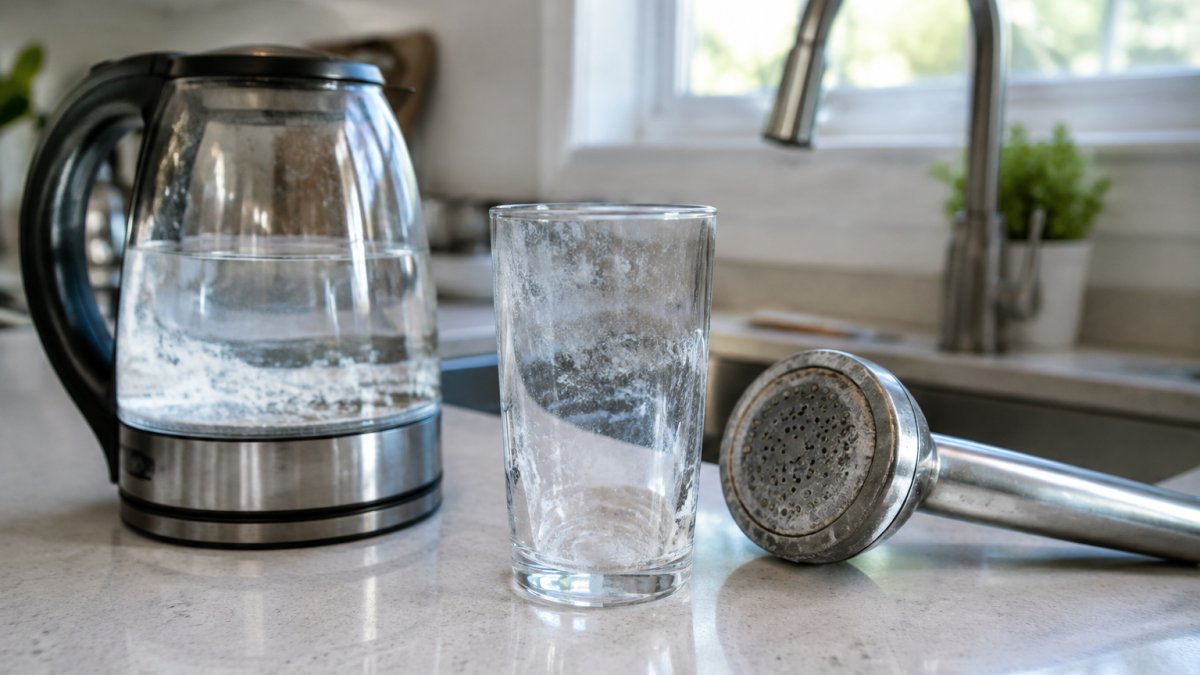
If your glassware comes out of the dishwasher spotted, your soap refuses to lather, and a chalky film keeps returning to the shower door, you are looking at the classic signs you need a water softener. If you want to understand the cause, read why your tap water is hard and what you can do. A water softener for a small South Florida home solves those problems at the source rather than scrubbing them away after the fact. Water testing across Miami-Dade and Broward Counties often reveals the same complaints again and again in condos and townhouses.
Watch for these signals:
- White crust on faucets, showerheads, and the dishwasher door
- Soap and shampoo that never quite rinse clean
- Stiff laundry and towels that feel scratchy
- Cloudy spots on glasses straight from the wash
- A water heater that rumbles or heats more slowly than it used to
Any one of these is worth a proper water test.
South Florida Water Hardness: What You're Actually Dealing With
Hardness in South Florida comes from the limestone aquifer the region draws its water from. As water moves through that rock, it picks up calcium and magnesium, the two minerals that define water hardness. Hardness is measured in grains per gallon or parts per million, and the higher the number, the more mineral your water carries.
The source matters. Water sources can differ, which is why a water test is used to determine the right system for each home.
For a deeper look at why local water runs hard and what that costs you, read why South Florida water is hard.
How Water Softeners Work and Why Salt-Free Conditioners Fall Short
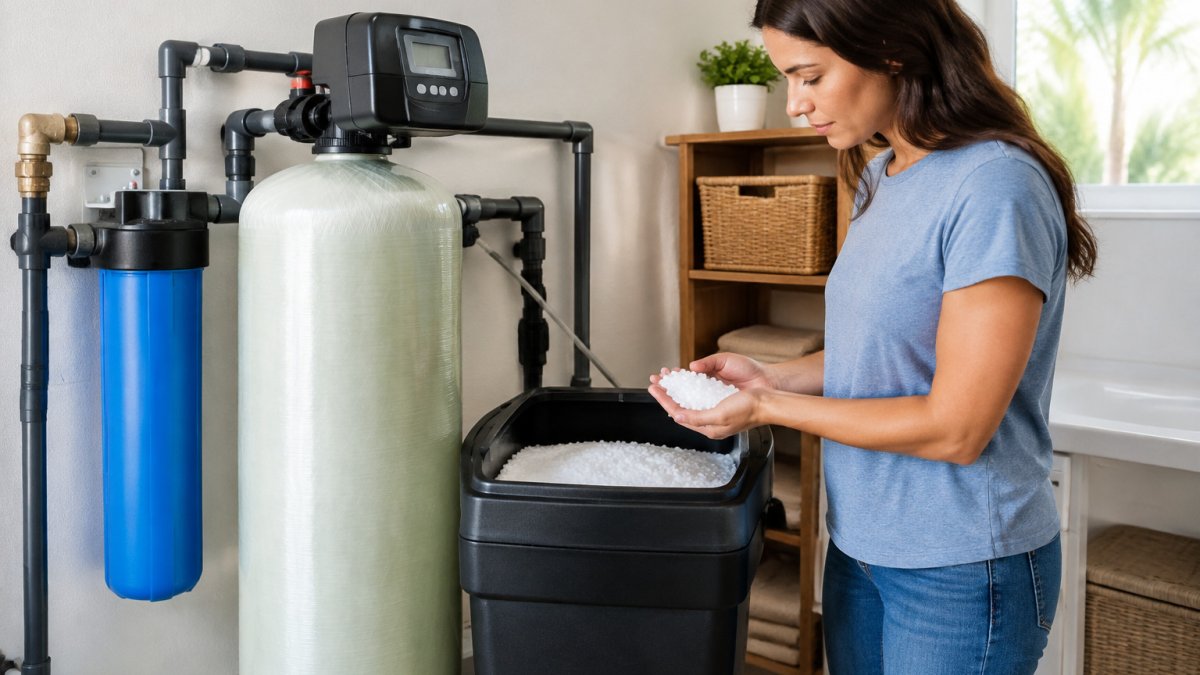
A water softener is a whole-house appliance that removes calcium and magnesium from your water through ion exchange, swapping hardness minerals for sodium on resin beads and then flushing itself clean during regeneration. The result is softened water that lathers properly and stops leaving scale behind.
Salt-free conditioners are a different product. They change how minerals behave so they cling less to surfaces, but they do not remove hardness.
The core components are straightforward:
- Resin beads capture calcium and magnesium
- Brine tank holds the salt used to recharge the resin
- Control valve schedules regeneration based on your actual water usage
For a closer look at the equipment itself, see the water softener options available locally.
Water Softener Sizing for a Small House: Matching Capacity to Real Demand
Water softener sizing for a small house starts with two numbers: how many gallons your household actually uses per day, and how hard your water is in grains per gallon. Size the system to those figures and to your peak flow rate.
Step 1: Estimate Daily Water Use
A common planning figure is about 75 to 80 gallons per person per day for indoor use. Add roughly 15 to 20 gallons per load if you run laundry frequently, and treat irrigation separately because outdoor water usually does not need softening. A two-person condo typically lands near 150 to 160 gallons daily; a family of four can reach 300 gallons or more. Your water bill, if it shows gallons or hundred-cubic-foot units, gives a real figure to replace the estimate.
Step 2: Convert Hardness to Daily Grain Demand
Multiply daily gallons by hardness in grains per gallon. If your water tests at 12 grains per gallon and you use 160 gallons a day, the daily demand is about 1,920 grains. That is the number the resin must remove between regenerations.
Step 3: Match Capacity to Regeneration Frequency
A softener's capacity is rated in grains removed per regeneration, often stated at a salt dose. The right capacity depends on your daily grain demand and how often the system regenerates, which a water test helps determine. An oversized or undersized system can each create its own problems, so sizing should match your actual usage.
Step 4: Check Peak Flow, Not Just Capacity
Capacity is only half the sizing decision. The control valve and resin bed must also handle the flow when a shower, dishwasher, and washing machine run at once. A small home usually has modest peak demand, which is why a single compact tank often works, but a larger family in a small footprint can still need a two-tank or higher-flow configuration. Confirm the service flow rating on the valve against your fixture count.
| Household Size | Typical Daily Use | Daily Grain Demand at 12 gpg | Sizing Priority |
|---|---|---|---|
| 1-2 people | 75-160 gallons | 900-1,920 grains | Compact cabinet unit |
| 3 people | 225-240 gallons | 2,700-2,880 grains | Mid-capacity single or two-tank |
| 4+ people | 300+ gallons | 3,600+ grains | High-efficiency metered, check peak flow |
Watch out: sizing from square footage or from a neighbor's system is the most common way small-home owners end up with a unit that either cycles too often or sits idle with stale water. Use your own gallons and your own hardness number.
Water Softener for Small South Florida Home Cost: What Drives the Price
Water softener for small South Florida home cost depends on capacity, valve type, installation complexity, and whether your home needs pretreatment for iron or chlorine. Pricing depends on your water test results, the space available, and the system required. For current pricing or a quote, visit the Hummingbird Water website.
What moves the number:
- Grain capacity and tank size
- Metered versus timer-based control valves
- Whether a drain line must be routed to a suitable discharge point
- Permit and plumbing adjustments for the install location
- Added filtration if iron or sediment is present
Water Softener Salt Usage and Operating Costs in a Small Home
Water softener salt usage in a small home is lower than most people expect, because a correctly sized metered system regenerates only when the resin needs it. Salt consumption scales with hardness and household size, not with the size of the house.
Ongoing costs to plan for:
- Salt, bought by the bag, consumed at a rate tied to your regeneration schedule
- A small amount of electricity to run the control valve
- Periodic resin checks and valve servicing over the system's lifespan
Softened water can let soap and detergent work with less product, and it can reduce scale buildup in the water heater.
Fitting a Compact System Into a Small Home: Installation and Space Realities
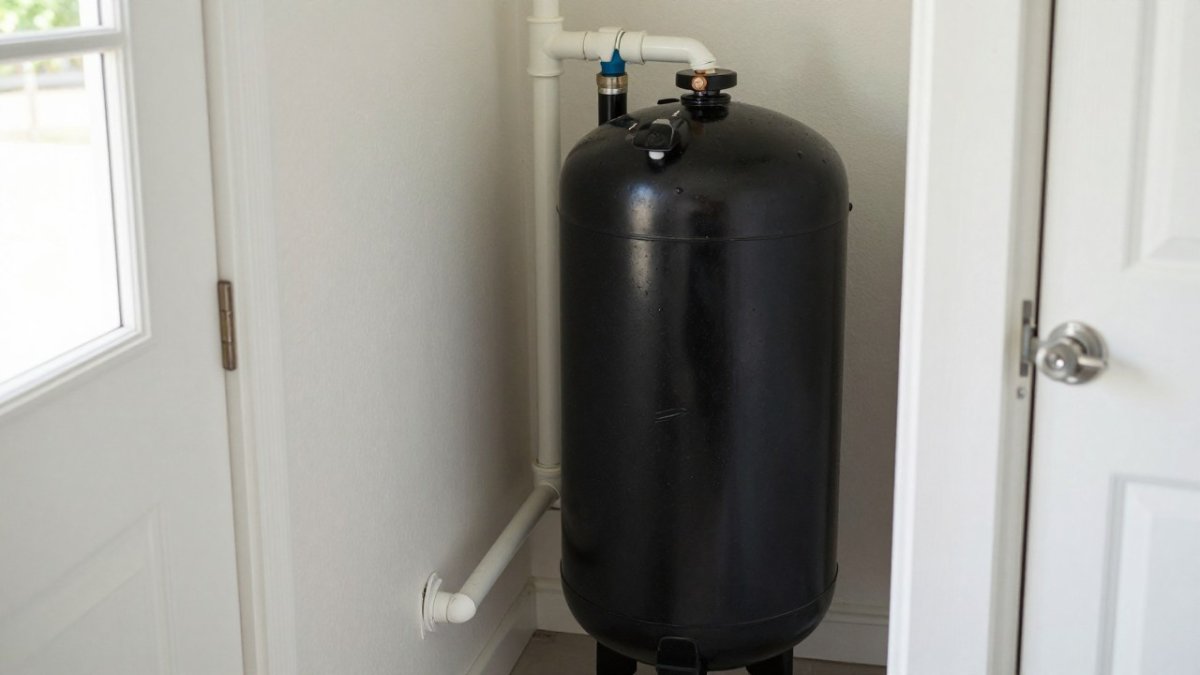
A compact system fits in most small homes, but the install location decides how well it works and how much maintenance you will actually do. Plan for the softener tank, the brine tank beside it, a power outlet, and a drain line for regeneration discharge before you buy, because moving a unit after the fact means redoing plumbing.
Footprint and Clearance
A single-tank cabinet softener typically needs a footprint of roughly 18 to 24 inches square and about 40 to 50 inches of height, with the brine tank adding another 15 to 18 inches of width. Leave several inches of clearance around the tanks for salt loading and service access. A utility closet, a garage corner, or an exterior wall with a nearby drain often works; a kitchen cabinet or a tight hallway usually does not.
Electrical and Drainage
Most metered control valves run on a standard 120-volt outlet, so you need a grounded receptacle within reach of the valve's power cord. The regeneration drain line must route to a suitable discharge point and slope continuously so wastewater does not sit in the hose. An improperly routed drain line can cause backups and may conflict with local plumbing requirements.
Plumbing Layout
Softening the whole home means tying in at the main line after the meter and before the water heater, so hot and cold water both benefit. In a condo or townhouse, confirm whether the main shutoff and a suitable tie-in point are accessible and whether association rules restrict work on shared walls or exterior lines. A bypass valve at the softener lets you isolate the unit for service without shutting off water to the house.
Discharge and Local Requirements
Before choosing a salt-based system, verify how your property handles brine discharge. Many municipal sewer systems accept softener regeneration discharge, but some areas restrict it, and septic systems need a discharge point that will not overload the drain field. Check with your local building or utility authority on permit and discharge requirements for your address, because rules vary by jurisdiction.
If you are planning ahead, our guide on how to plan water softener installation in Miami-Dade walks through the space and plumbing checks before you buy.
Book a Water Test and Get a System Sized for Your Home
A water test tells you the actual hardness level, flags iron or chlorine, and provides the numbers needed to size a system that fits your home and your usage.
Hummingbird Water is a local, family-run business serving Miami-Dade and Broward Counties. We test your water first, then build a custom-sized system using NSF-certified components manufactured and assembled in the USA. Our own crew handles the installation, not subcontractors.
Get started with Hummingbird Water and put softened water at every tap in your home.
Frequently Asked Questions
What size water softener do I need for a small house?
Sizing starts with your daily water use and your water's hardness level in grains per gallon. A small household of one or two people typically uses far less water than a four-bedroom family home, so a smaller grain-capacity unit often fits. Measure your hardness with a water test, estimate daily gallons from your bill or fixture count, then multiply gallons by hardness to get daily grain demand. Choose a system that regenerates roughly once a week rather than daily. A custom-sized system avoids paying for capacity you never use.
Are water softeners needed in Florida?
Much of South Florida sits on limestone, which dissolves calcium and magnesium into the water supply and raises hardness levels. That hardness causes scale buildup in water heaters, dishwashers, and plumbing, plus soap scum and spotting on fixtures. Whether you need a softener depends on your specific water test results. Municipal supplies vary by treatment plant, and well water can run harder still. A water quality test tells you the actual hardness level before you decide on treatment.
How much water softener salt does a household use?
Salt consumption tracks your hardness level and how much water you use. Salt consumption rises with harder water and higher usage. Regeneration frequency matters too: a properly sized system regenerates less often than an oversized one. Check the brine tank every few weeks and top it up before it runs low. Your installer can estimate monthly salt use based on your test results and household size.
Is a water softener worth it for a small household?
Small homes still run water heaters, washing machines, dishwashers, and showers, and those appliances collect scale just as fast as in larger houses. Softened water reduces mineral deposits, cuts soap and cleaning supply use, and improves how skin and hair feel. Ask for a water test first so the recommendation fits your actual hardness and usage.