 how-to
Why Is My Tap Water Hard and What You Can Do
Last Updated: November 7, 2026
Quick Summary
Your tap water is hard because water dissolves calcium and magnesium as it moves through rock and soil, especially limestone, chalk, and gypsum. That is why is my tap water hard: the minerals accumulate before the water reaches your tap. Hardness above about 7 gpg is where most homeowners notice soap scum and scale.
- Water hardness is reported in mg/L, ppm, and grains per gallon; divide mg/L by 17.1 to get gpg.
- Homeowners often notice soap scum and scale once hardness climbs above about 7 gpg.
- Test strips read in steps of 25 to 50 mg/L, so they are fast but coarse.
- Use the high end of a utility's hardness range when sizing a softener to avoid undersizing.
- A water softener uses ion exchange to swap calcium and magnesium for sodium.
Table of Contents
- Where Hard Water Comes From
- Water Hardness Levels and What They Mean
- How to Test Water Hardness at Home
- Signs of Hard Water in Your Plumbing and Appliances
- How to Soften Hard Water
- Book a Water Test Before You Choose a System
- Frequently Asked Questions
Where Hard Water Comes From
If you have ever wondered why is my tap water hard, the short answer is geology. Water is a solvent, and as it moves through rock and soil, it dissolves the minerals it touches. The two that matter most are calcium and magnesium.
This guide breaks down where those minerals come from, how to measure them, and what to do about the result. First, the mechanism.
How Water Picks Up Calcium and Magnesium
Rain starts out soft. It has almost no mineral content when it falls. But it does not stay that way.
As water percolates down through soil and sedimentary rock, it picks up dissolved minerals. Calcium and magnesium are the two big ones.
Groundwater that sits in contact with mineral-rich rock for a long time ends up harder than surface water that moves fast.
Limestone, Chalk, and Gypsum: The Geological Sources
Three rocks drive most water hardness:
- Limestone, made mostly of calcium carbonate
- Chalk, a softer form of the same material
- Gypsum, which carries calcium sulfate
Water flowing through these formations absorbs calcium and magnesium carbonate. The result is hard water at your tap.
Water Hardness Levels and What They Mean
Water hardness is reported in three units that trip people up: milligrams per liter (mg/L), parts per million (ppm), and grains per gallon (gpg). The first two are numerically identical for hardness, so a reading of 150 mg/L is the same as 150 ppm. Grains per gallon is the unit most treatment professionals and appliance manufacturers use, and it is the one you will see on softener sizing charts.
Water hardness is commonly grouped into classification ranges. Here is how the ranges break down, with all three units side by side:
| Classification | mg/L (ppm) | Grains per gallon (gpg) |
|---|---|---|
| Soft | 0-60 | 0-3.5 |
| Moderately hard | 61-120 | 3.5-7.0 |
| Hard | 121-180 | 7.0-10.5 |
| Very hard | 181+ | 10.5+ |
To convert mg/L to gpg, divide by 17.1. To go the other way, multiply gpg by 17.1. A few worked examples make this concrete:
- 85 mg/L ÷ 17.1 = about 5.0 gpg (moderately hard)
- 200 mg/L ÷ 17.1 = about 11.7 gpg (very hard)
- 14 gpg × 17.1 = about 239 mg/L (very hard)
Homeowners often start noticing soap scum, scale, and stiff laundry once hardness climbs above about 7 gpg. Below 3.5 gpg, a softener is often unnecessary unless there are other water-quality issues.
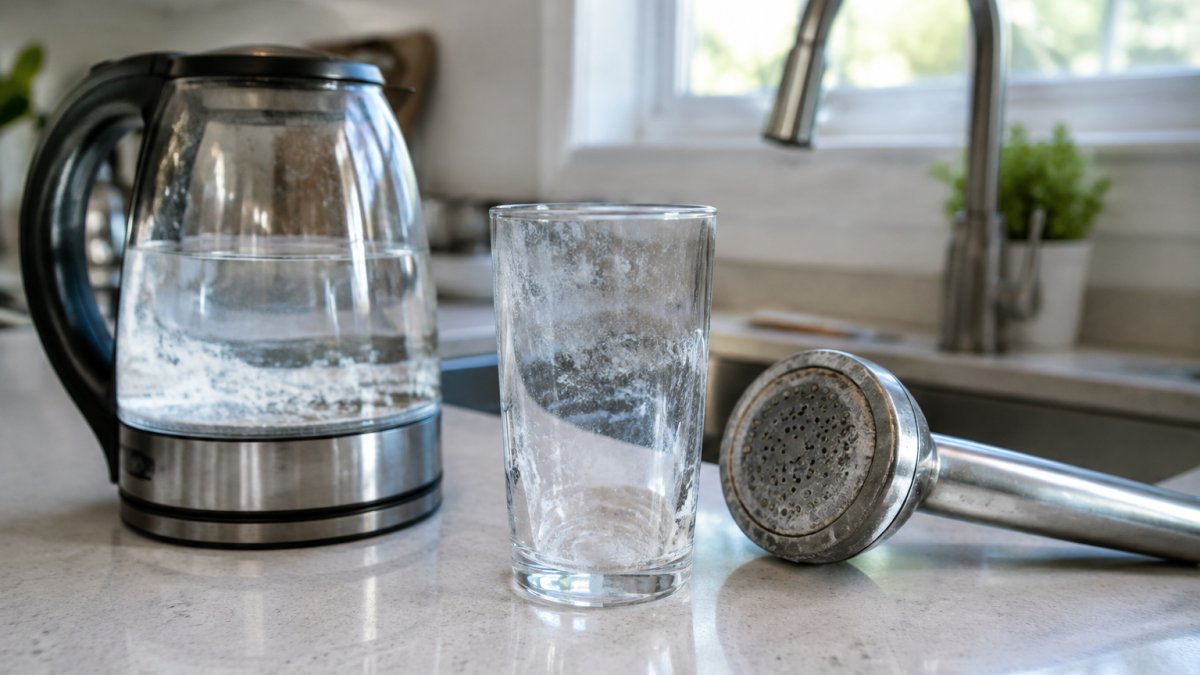
Hardness also splits into two types. Temporary hardness comes from calcium and magnesium bicarbonate. It drops out of solution when water is boiled, which is why kettle scale forms. Permanent hardness comes from calcium and magnesium sulfates and does not respond to boiling. Total hardness is the sum of both, and that is the number your test report usually shows.
Watch out: a utility report may list hardness as a range (for example, 120-180 mg/L) rather than a single number. Use the high end when sizing a softener, because undersizing is a common cause of "the softener didn't work" complaints.
How to Test Water Hardness at Home
Testing water hardness at home is quick and inexpensive. You have three practical options: test strips, a liquid titration kit, or a laboratory test. Each tells you something different, and knowing the limits of each is the key to getting a useful number.
Test Strips: Fast but Coarse
Test strips are a quick and simple option. Here is a practical walkthrough:
- Fill a clean glass with cold tap water. Let the tap run for about a minute first so you are not sampling water that has been sitting in the pipes.
- Dip the strip into the water for the time stated on the package, usually one to five seconds.
- Shake off excess water and wait for the color to develop. Do not wait longer than the package says, or the reading will drift.
- Match the color to the chart on the package.
- Record the reading in mg/L or gpg, whichever the strip reports.
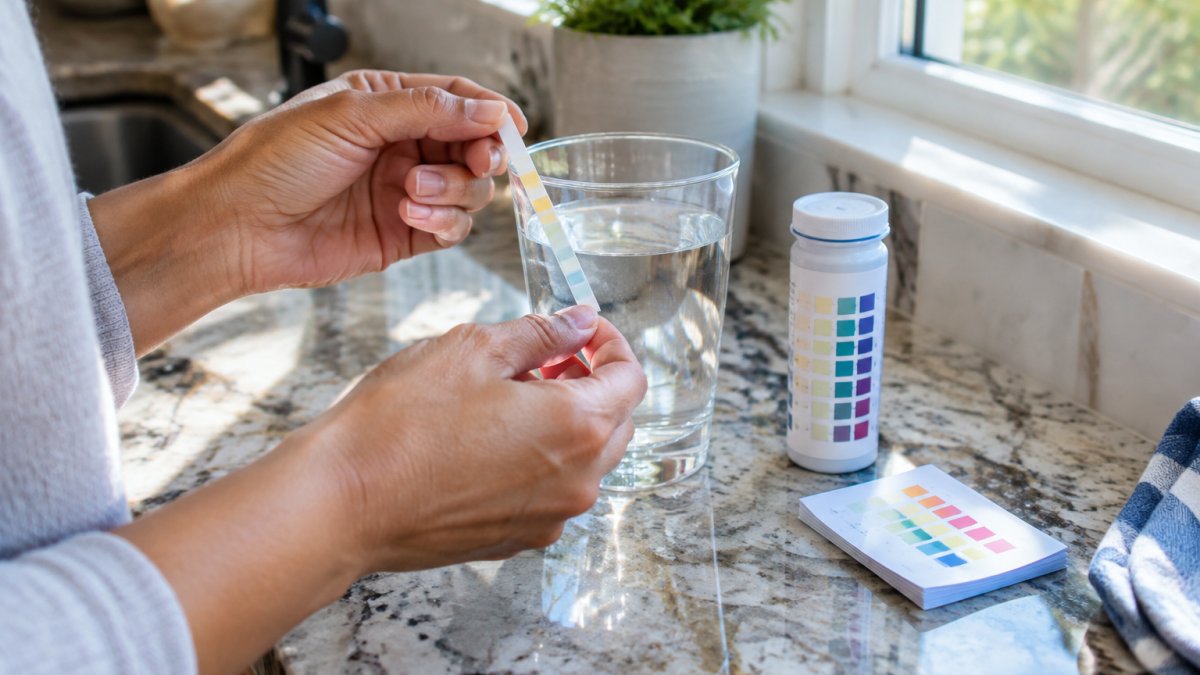
Strips are fast but coarse. Most consumer strips read in steps of 25 to 50 mg/L, so a strip that shows "hard" could mean 125 mg/L or 175 mg/L. That range matters when you are sizing a softener.
Liquid Kits: Tighter Numbers
A liquid titration kit costs a bit more but gives a tighter reading, often within 10 mg/L. You add drops of a reagent to a measured water sample until the color changes, then count the drops. The kit converts drops to mg/L or gpg. Many of these kits can be reused for multiple tests, which makes them useful if you want to check whether hardness changes over time.
Laboratory Testing: The Full Picture
For a whole-home decision, a professional lab test is the most reliable option. A lab can report total hardness, calcium and magnesium separately, iron, manganese, chlorine, pH, and other parameters in one report. A lab test can help prevent a wrong-sized softener or an unnecessary purchase.
Reading Your Local Water-Quality Report
Your utility publishes an annual water-quality report, also called a consumer confidence report (CCR) (the EPA). It lists detected minerals and their levels, and it is free. Find the hardness figure, then check whether it is reported as a range.
If your report does not list hardness directly, call your utility's customer service line and ask for the current hardness range in gpg. Most providers will give you a number over the phone.
Interpreting Your Results
Once you have a number, compare it to the classification table above. A reading of 7 gpg or higher is where most homeowners start noticing symptoms.
Watch out: a single test taken after a heavy rain or a utility source switch can mislead you. Test again in a different season, or ask your utility whether the source changes during the year.
Signs of Hard Water in Your Plumbing and Appliances
The symptoms show up before the test does. Watch for these:
- Spotted glassware and white film on dishes
- Stiff towels and scratchy laundry
- Soap that will not lather
- Soap scum on tubs and shower doors
- Chalky buildup on faucets and showerheads
- Scale inside the water heater, which cuts efficiency
- Dull hair and dry skin after washing
Mineral scale is the expensive one. It coats heating elements and narrows pipes over time. A common mistake is treating the spots and ignoring the cause.
If several of these sound familiar, our guide to the 5 signs you need a home water filtration system walks through what each symptom means.
How to Soften Hard Water
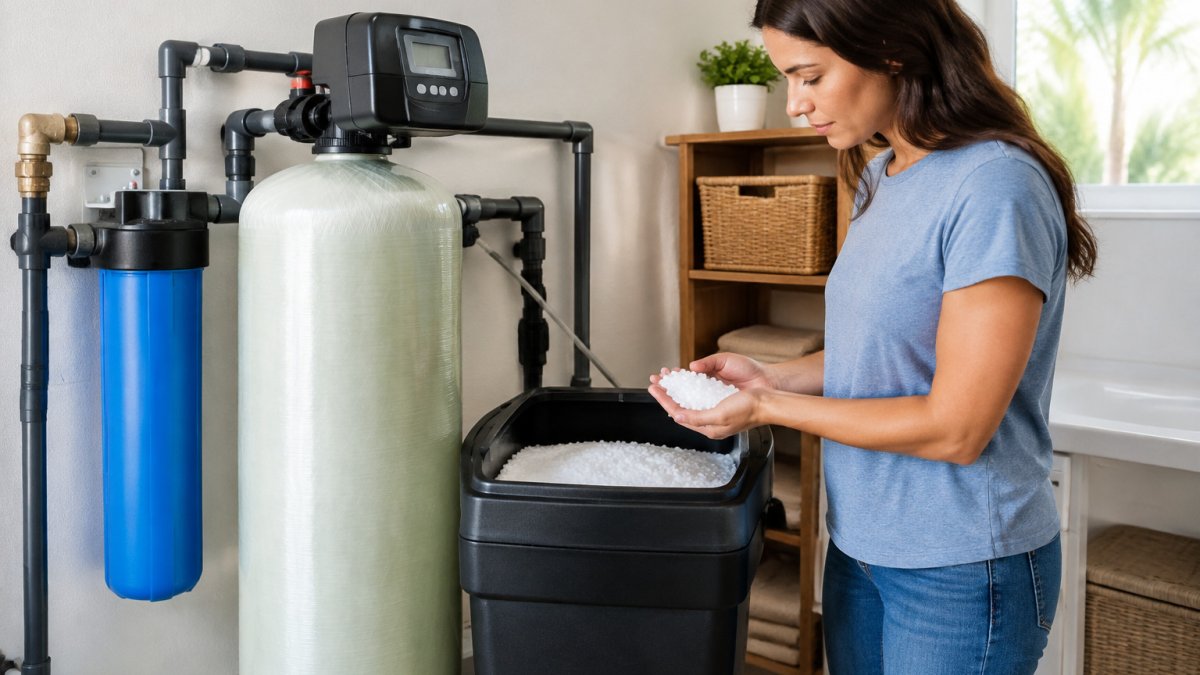
The standard fix for hard water is a water softener that uses ion exchange. Resin beads swap calcium and magnesium for sodium, and the water comes out soft.
A few things to know before you buy:
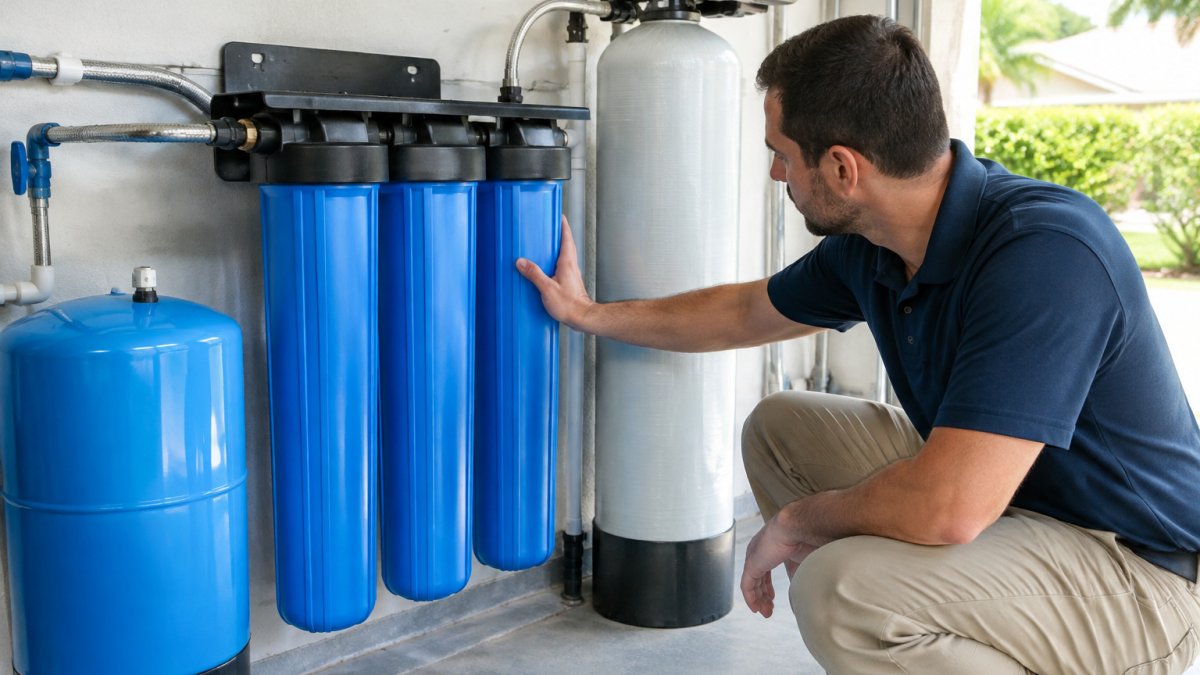
- Size matters. A system should match your household's water use and tested hardness. Oversized wastes capacity; undersized runs out.
- Test first. A softener sized without a water test is a guess.
- Not every problem is hardness. Iron and chlorine need different treatment.
Watch out: a softener that "didn't help" can be the result of sizing or installation rather than the softener itself.
For a closer look at the local water, read why South Florida water is hard and what that costs you. To see the treatment option itself, review our whole home systems or our affordable water softener in Coral Gables, FL.
Book a Water Test Before You Choose a System
Guessing at your water is how homeowners end up with the wrong system.
At Hummingbird Water, we test first, then size the system to the result.
Ready to stop guessing? Get in touch with us to book an appointment and get a straight quote.
Hard water is a geology problem, not a plumbing failure, and it will not fix itself. Test your water, read the number, and treat accordingly.
Frequently Asked Questions
Is it okay to drink hard tap water?
Hard water is generally safe to drink. The calcium and magnesium that cause hardness are minerals your body needs, and the EPA does not regulate hardness as a contaminant. That said, many people dislike the taste or the film it leaves on dishes. If taste is your main concern, a reverse osmosis system at the kitchen tap removes the minerals and gives you cleaner-tasting drinking water without treating the whole house.
Does boiling water make it less hard?
Boiling removes only temporary hardness, the calcium carbonate that drops out as scale when heated. It does nothing for permanent hardness, which is tied to magnesium and sulfate. In practice, boiling your tap water will not fix hard water for drinking, cooking, or appliance protection. A water softener or ion exchange system addresses both types at the source.
How do I know if my water hardness levels are too high?
Test your water and compare the result to standard classifications. Under 60 mg/L (about 3.5 grains per gallon) is soft, 61 to 120 mg/L is moderately hard, 121 to 180 mg/L is hard, and anything above 180 mg/L is very hard. If your result lands in the hard or very hard range and you see scale or soap scum, treatment is worth considering.
Can hard water damage appliances or affect hair and skin?
Yes. Mineral scale builds up inside water heaters, dishwashers, and washing machines, which makes them work harder and shortens their lifespan. Soap and shampoo do not lather as well, so you use more product and still get residue. Many people notice dry skin and dull hair. A whole-home softener removes the hardness before it reaches your plumbing and fixtures.